
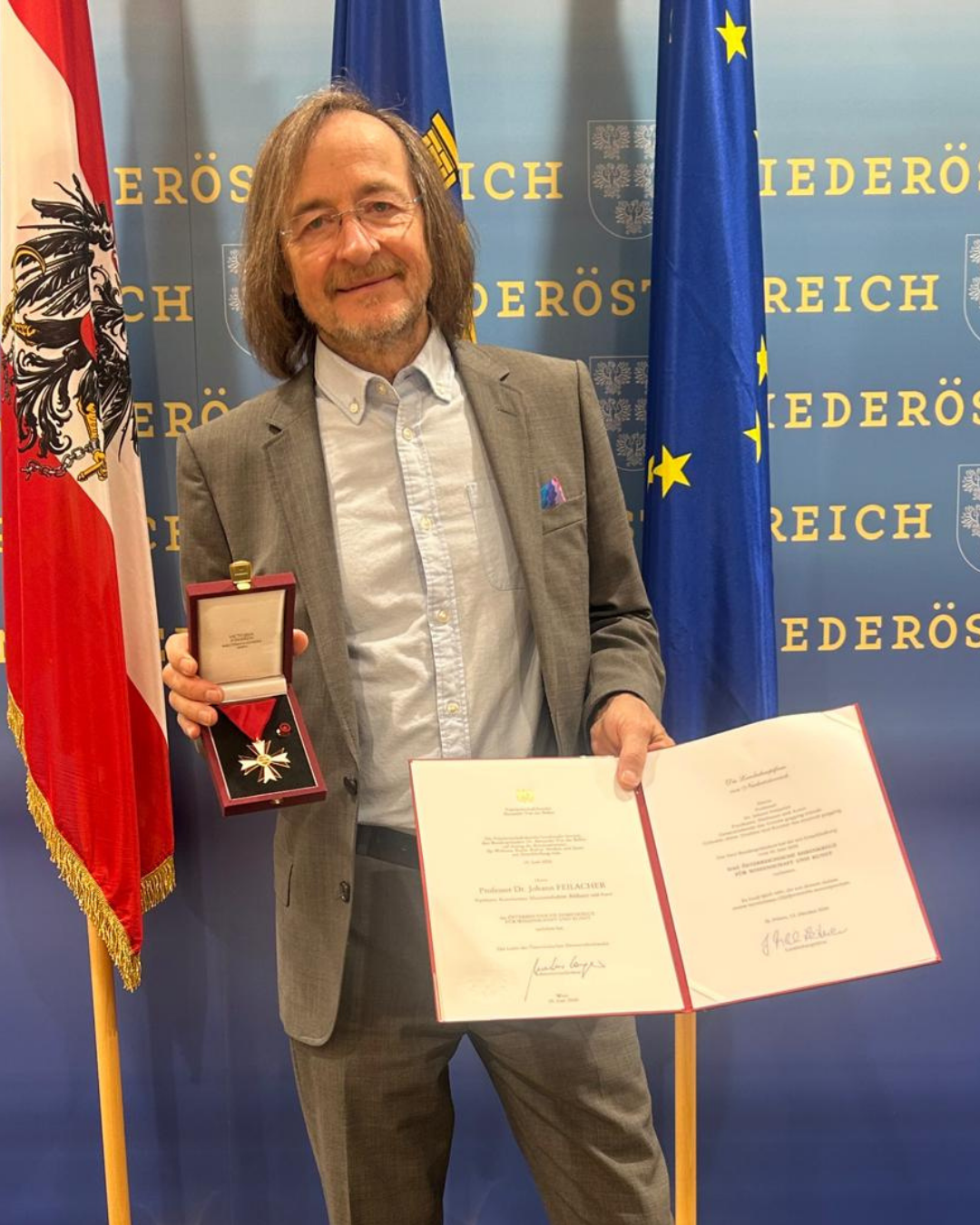






On October 13, 2026, Johann Feilacher received one of Austria’s highest state honours: the Ehrenkreuz für Wissenschaft und Kunst der Republik Österreich, the Cross of Honour for Science and Art, awarded in the name of the Federal President of the Republic of Austria.
The award recognised exceptional contribution to science or the arts. In Feilacher’s case, it recognised a lifetime of both.
The man who gave artists their independence
Born in Villach in 1954, Feilacher trained as a psychiatrist and became Leo Navratil’s assistant at Gugging in 1983. He took over from Navratil in 1986 and immediately understood that what was happening at Gugging was not therapy. It was art. That distinction mattered enormously, and Feilacher spent the following decades acting on it.
In 2000 he achieved something that had seemed unlikely: he separated the artists’ community from the psychiatric clinic entirely, establishing it as an independent social welfare institution. The artists were no longer patients in a clinical setting. They were residents in a community built around their practice, with the stability, safety, and space to work on their own terms. That decision changed the lives of dozens of people.
The environment Feilacher created gave artists a home that was secure and inspiring in equal measure. They had access to materials, to community, to an audience, and to a place in the world that was entirely their own. They did not have to choose between their art and their wellbeing. The two were inseparable, and the institution was built to honour that.
From the margins to the mainstream
What followed was not just good for the artists. It changed the trajectory of Art Brut itself.
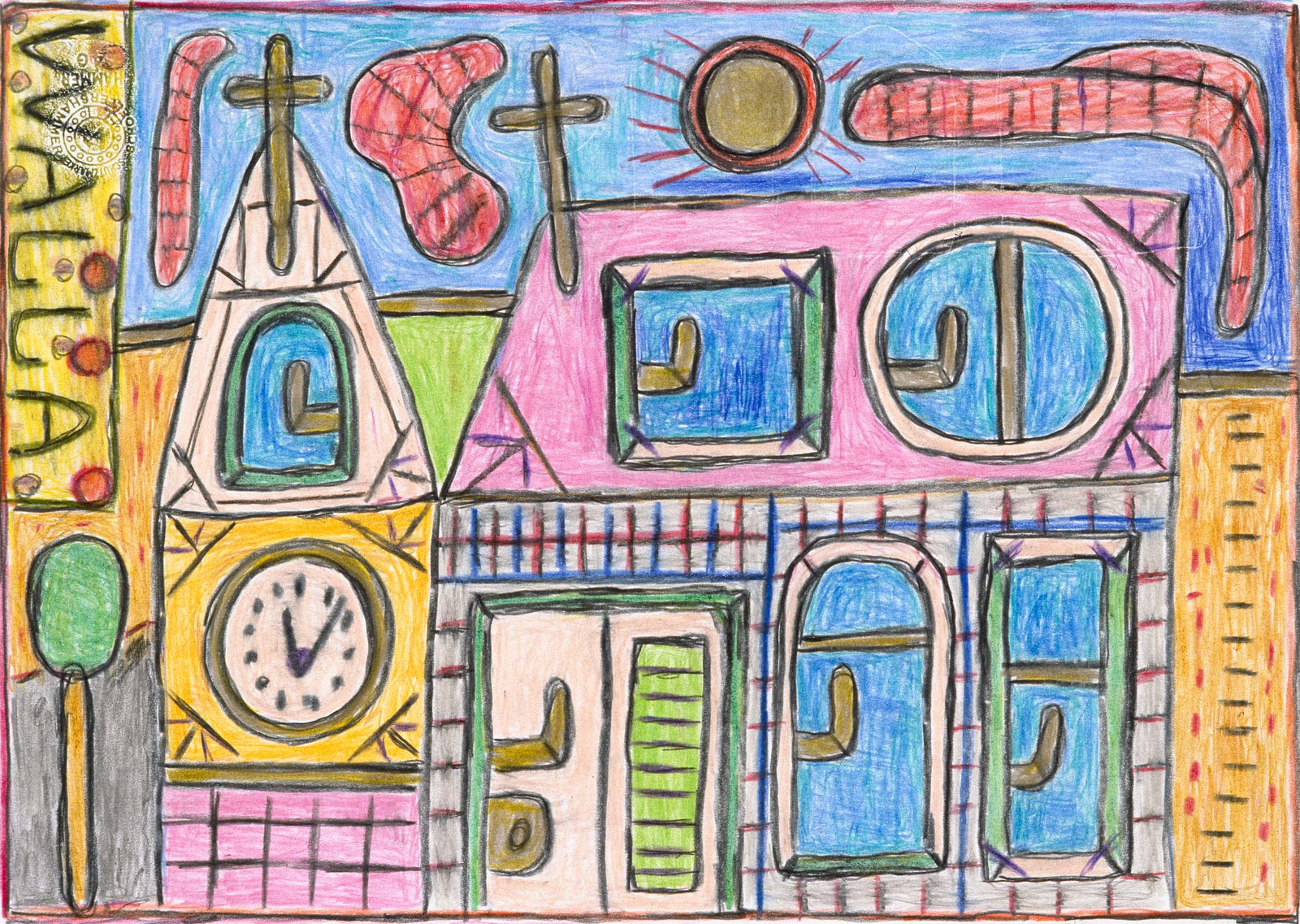
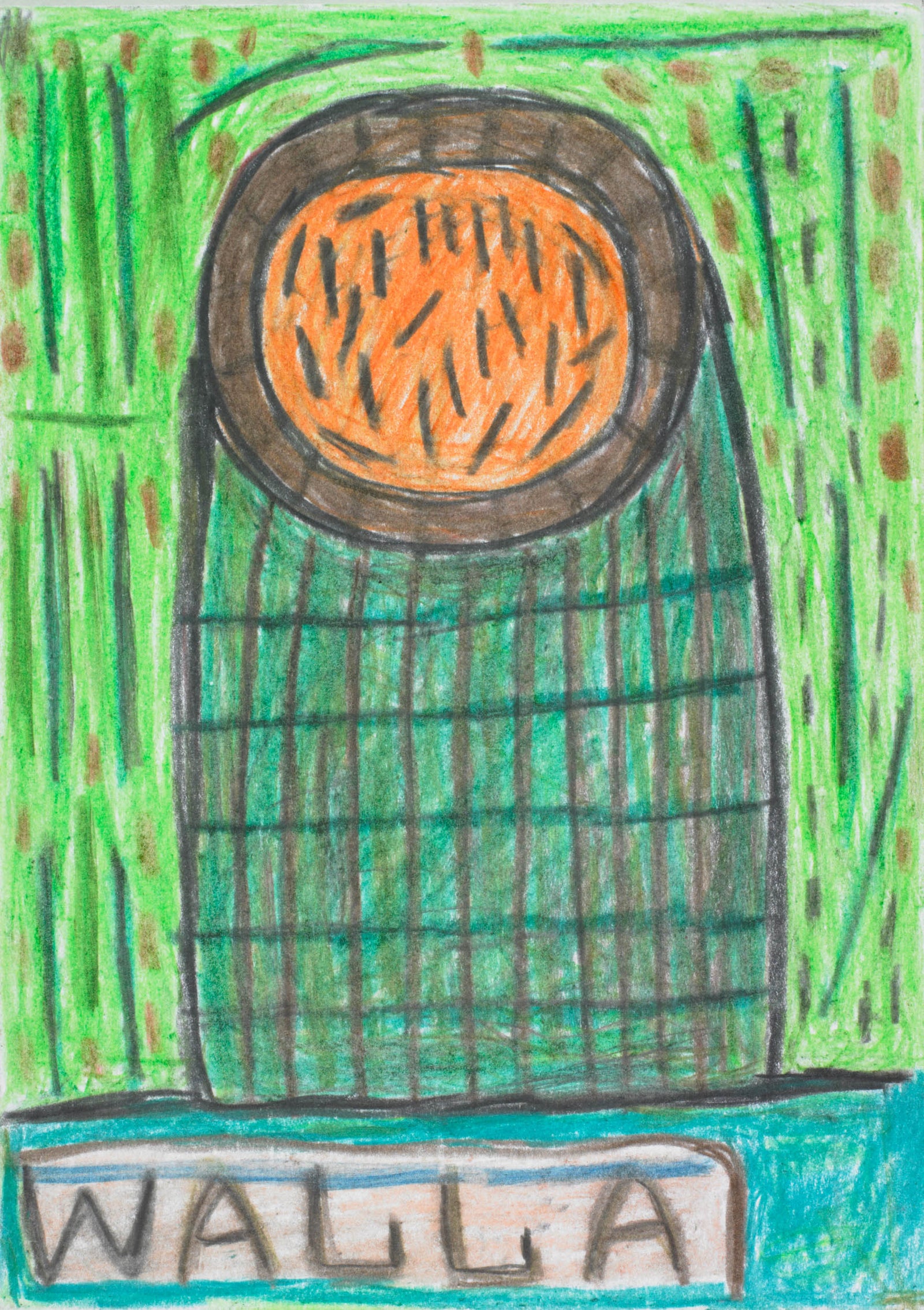
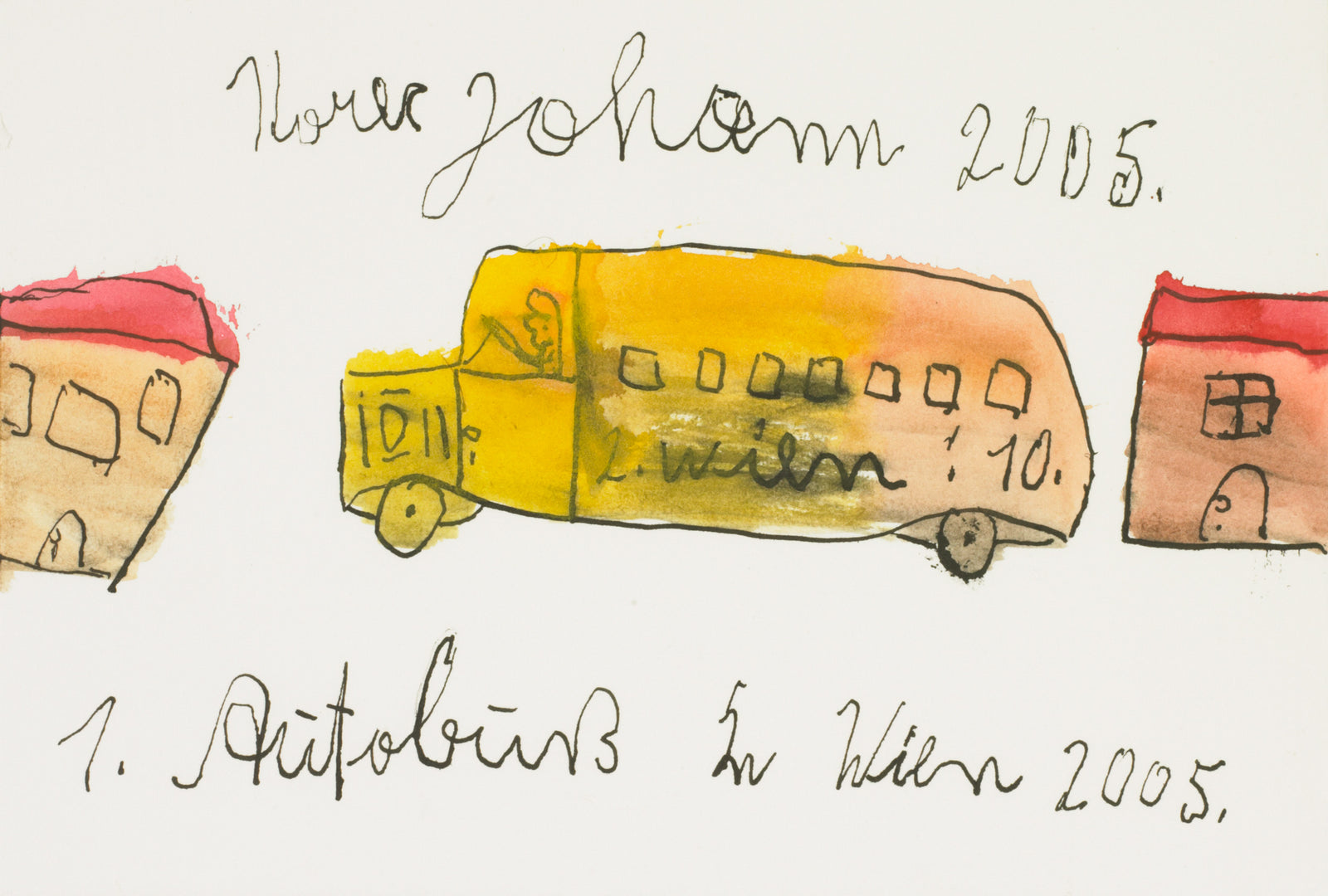
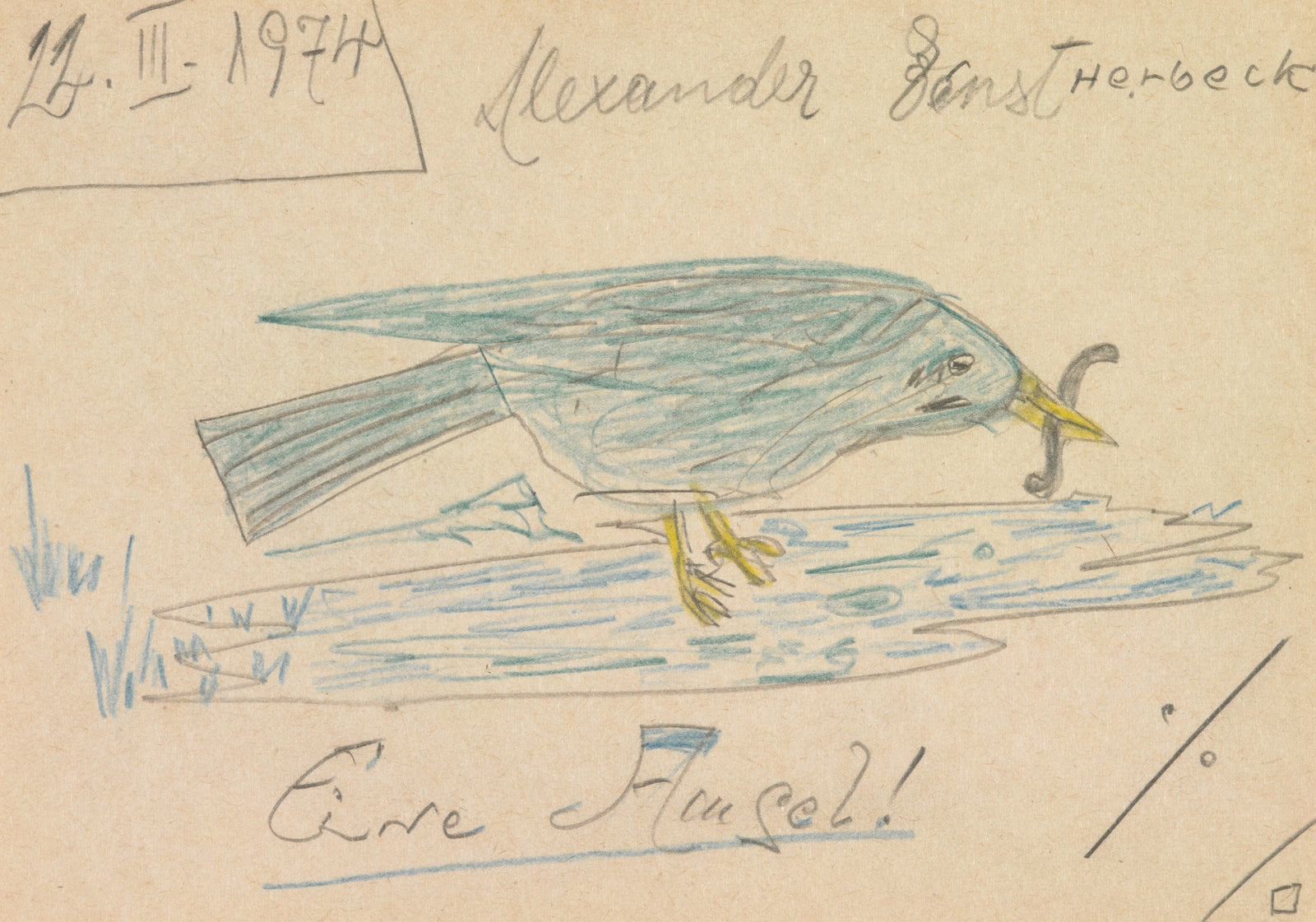
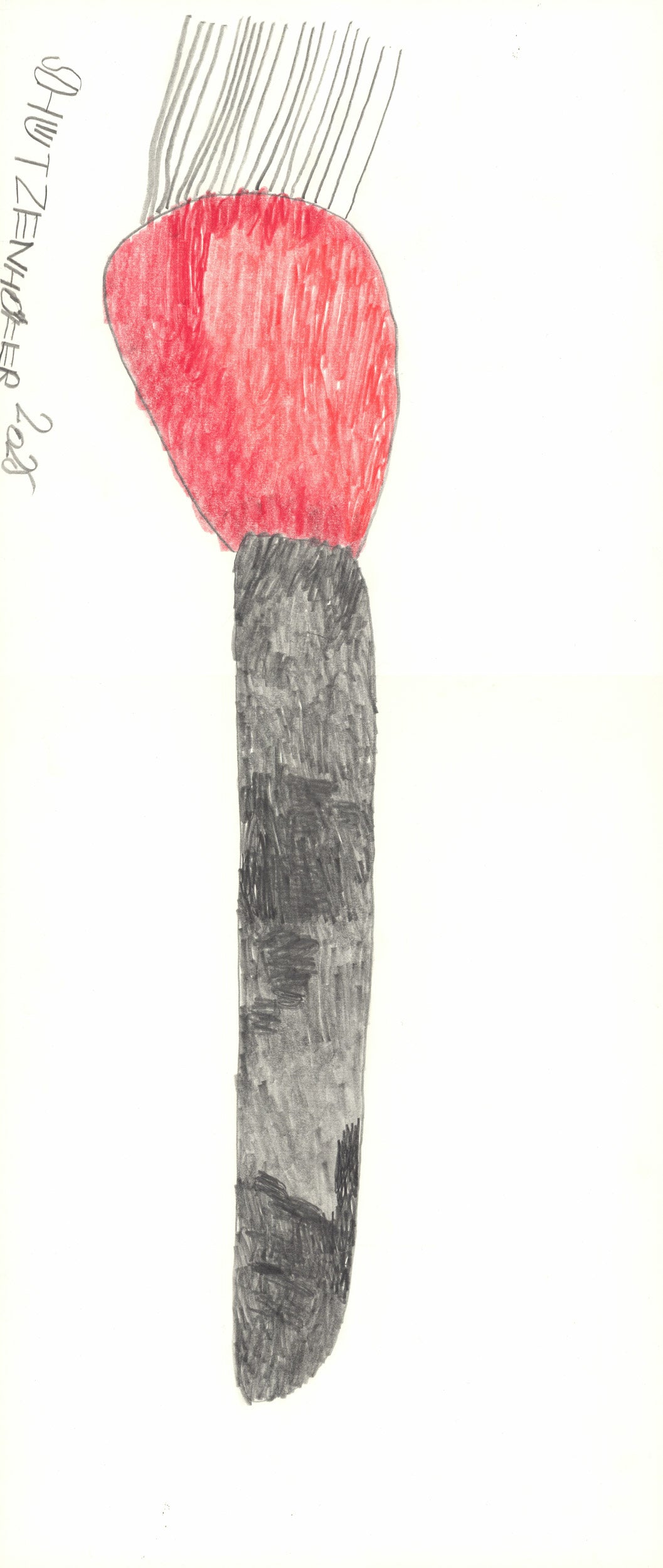
Feilacher and his colleagues brought the work of the Gugging Artists to international attention through exhibitions, art fairs, and museum partnerships across Europe, the United States, and Japan. In 2006, together with Nina Katschnig, he opened museum gugging, which today stands as one of the most important exhibition venues for Art Brut internationally.
The artists Feilacher championed are no longer considered outsiders in the sense the word once implied. Their work is held in the permanent collections of institutions including MoMA and the Albertina. Art Brut is not a curiosity at the edges of the contemporary art market. It is a force within it. That shift did not happen by accident. It was built, slowly and deliberately, by people who believed the work deserved to be seen on its own terms, without qualification, without condescension, and without being confined to a category that kept it at arm’s length from the broader conversation.
Feilacher was central to that. He is also a sculptor himself, known for large-scale abstract wood works made with chainsaws, which means the award recognised not only an institutional builder but a practising artist who understood from the inside what it means to make work and have it taken seriously.
He retired as long-standing director of museum gugging in 2022. What he left behind is not simply an institution. It is a model for how art, dignity, and community can exist in the same place at the same time.
A recognition that is long overdue
galerie gugging congratulates Johann Feilacher on this honour. The artists who live and work at Gugging today, the collectors who hold their work, the museums that exhibit it, and the gallery that represents it all exist within a story that Feilacher helped write. This award is the Austrian state acknowledging that contribution at the level it deserves.
What he built made everything that followed possible.