
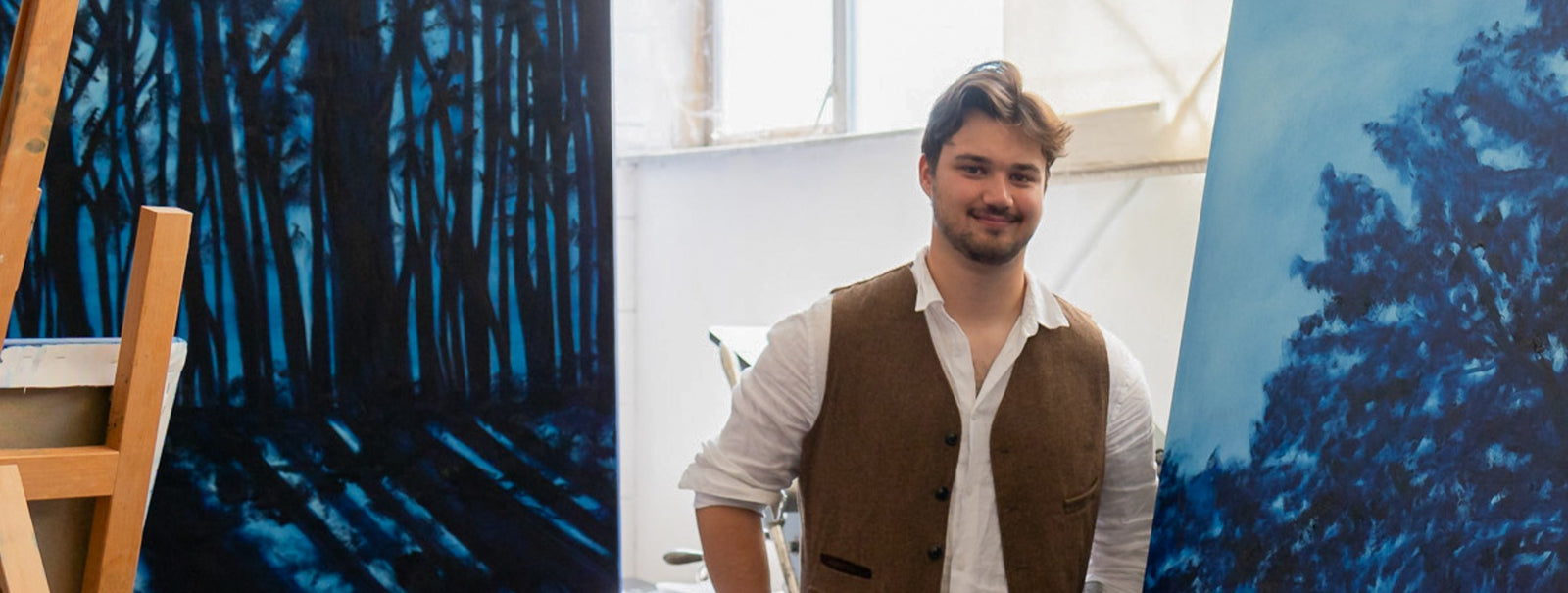

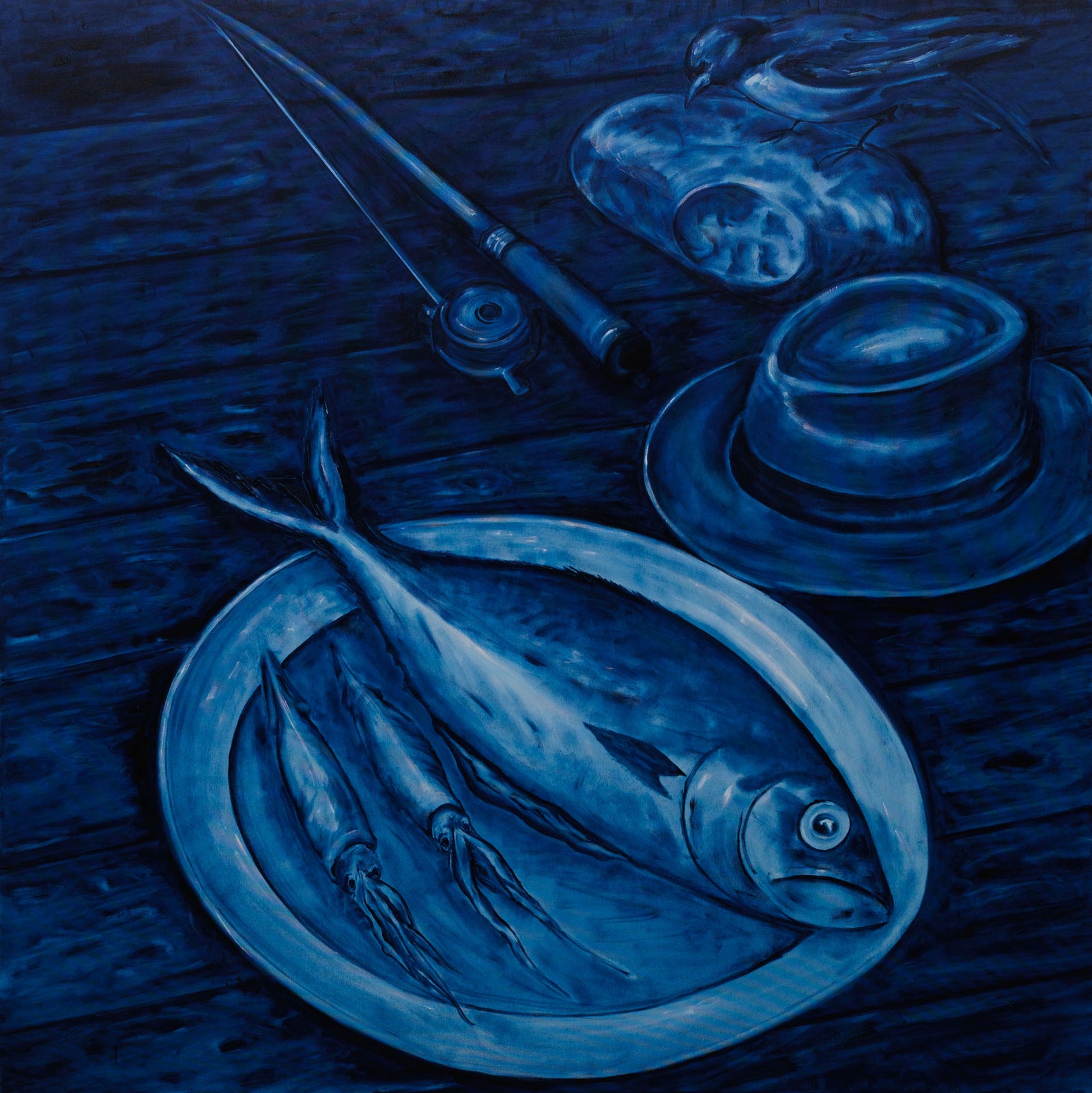

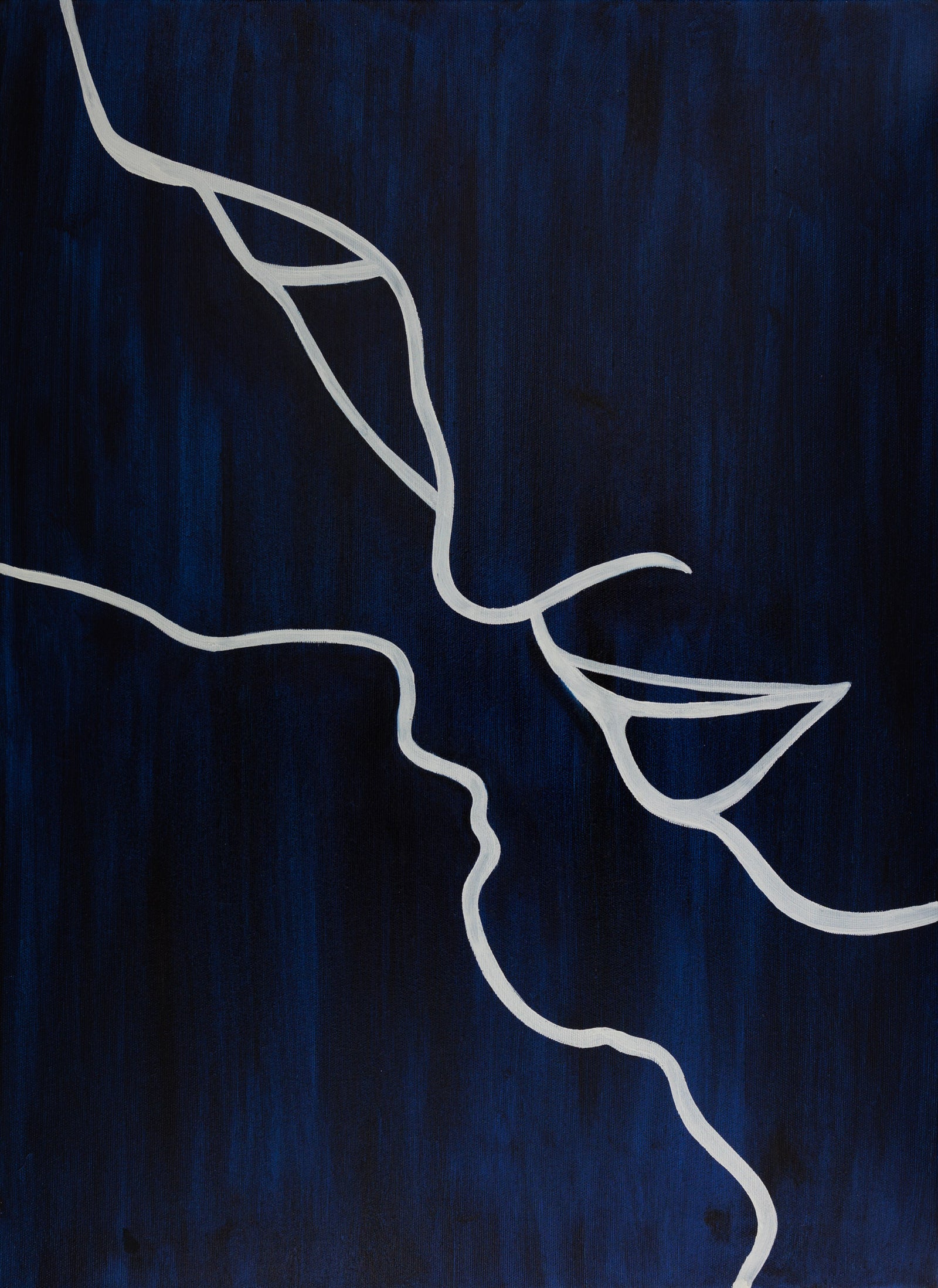

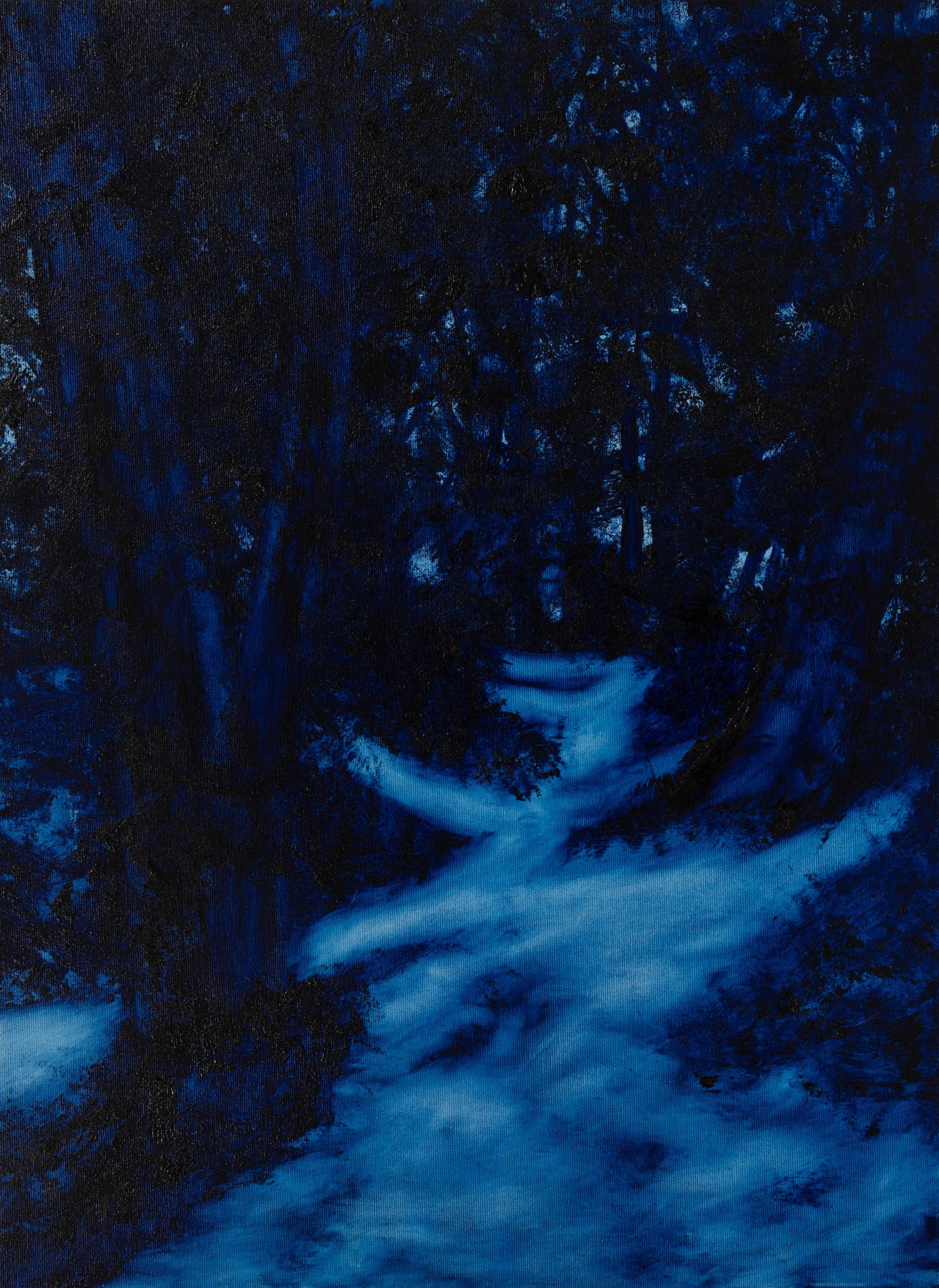

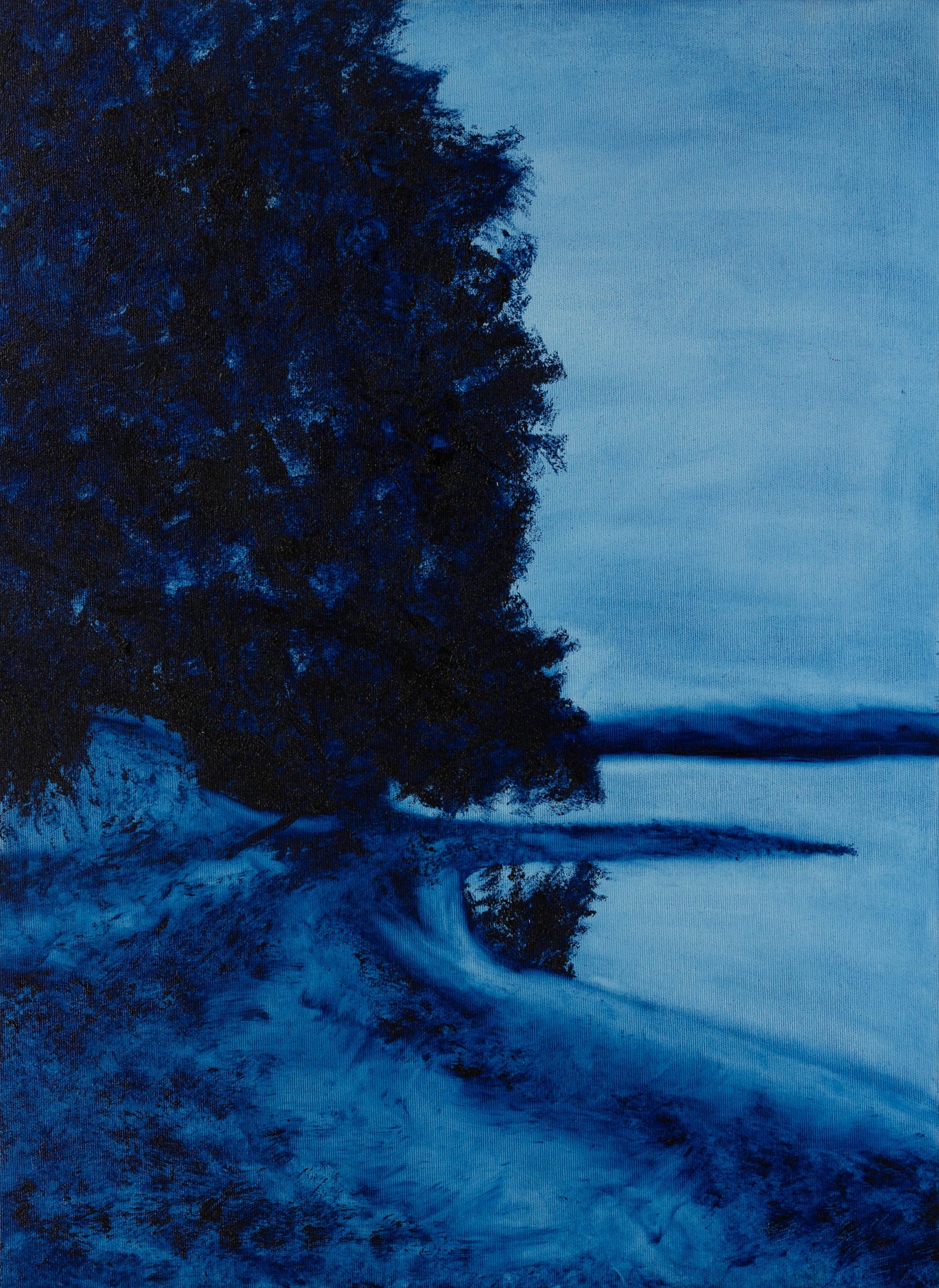

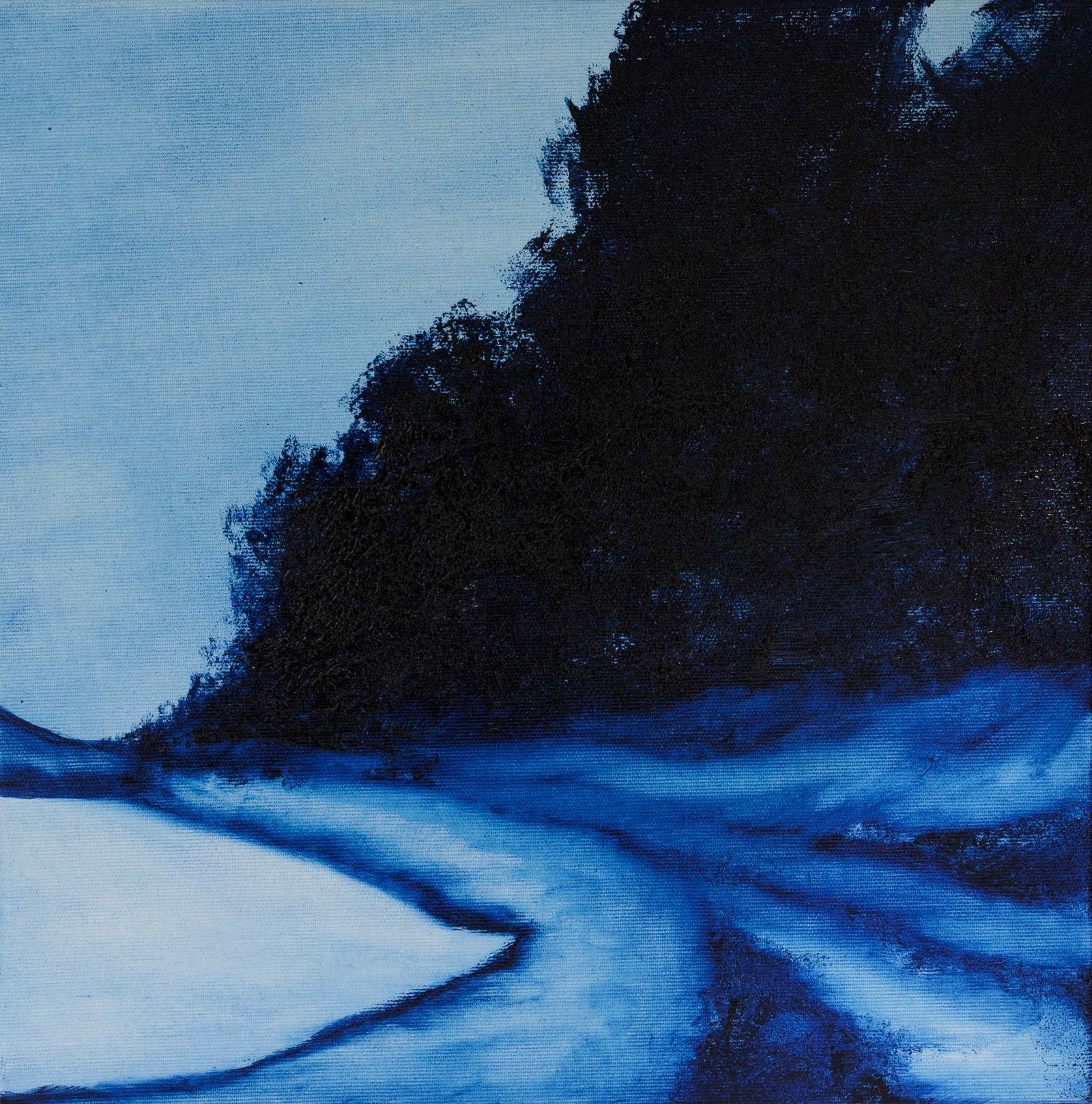

When standing in front of a painting byMarko Djurdjevic, the experience is immediate and visceral. His large-format canvases are charged with emotional intensity. Figures are suspended in shades of deep blue, faces and bodies seem both personal and universal. Djurdjevic’s art does not merely depict; it confronts, enveloping the viewer in its atmosphere.
Life and Beginnings
Born inVienna in 2001, Djurdjevic grew up in the Klosterneuburg children’s home. These formative years profoundly influenced his artistic vision. While some artists train in academies or hone their practice under mentors, Djurdjevic forged his path independently. The absence of formal art education allowed him to create freely, unfiltered by academic constraints, and to build a visual language rooted in personal memory and lived experience.
His paintings frequently revisit themes of love, death, abandonment, and loneliness, reflecting both the vulnerability of childhood and the resilience of adulthood. The works become not just images, but spaces where memory is processed, re-lived, and reimagined.
The Role of Blue
If there is a single element that defines Djurdjevic’s work, it is the colour blue. Not used casually or decoratively, blue is his chosen lens through which the world is filtered. It operates as both a veil and a balm: a filter that separates reality from memory, and a medium of healing that allows past trauma to find new expression.
In his canvases, blue is never flat or uniform. It shifts from deep ultramarine to lighter, almost translucent tones, layered and reworked until the surface vibrates with tension. This chromatic strategy positions Djurdjevic’s art in dialogue with historic painters such as Yves Klein, who explored blue as an existential field, but Djurdjevic wields it in a deeply personal way, blue as biography, blue as survival.
Scale, Presence, and Composition
Unlike many self-taught artists who work on intimate surfaces, Djurdjevic embraces monumental scale. His canvases often stretch over two meters, their size commanding the physical presence of the viewer. This decision is not incidental; it forces viewers into a relationship with the work that is bodily, not just visual.
His figures, often isolated yet full of tension, float in undefined environments. The compositions resist narrative closure. Faces turn away, limbs extend beyond the canvas, and gestures are frozen in states of ambiguity. The result is a sense of unfinished memory with moments that linger on the edge of recollection, never fully resolved.
A Self-Taught Voice with Contemporary Resonance
Djurdjevic belongs to a growing movement of self-taught artists who are redefining the boundaries of contemporary art. Unlike “outsider” or Art Brut artists of the past who have typically been marginalised on the fringe of contemporary conversation, today’s self-taught voices are increasingly recognised in major art fairs, galleries, and collections for their authenticity and independence.
What distinguishes Djurdjevic within this field is his maturity of vision at a young age. At just 24, his ability to translate difficult personal histories into universally resonant paintings suggests a trajectory that is only beginning to unfold. For collectors, this represents a rare opportunity to engage with an artist at the start of what promises to be a significant career.
Vienna and the Legacy of Expression
Vienna has historically nurtured artists who push emotional and psychological boundaries, from Egon Schiele and Oskar Kokoschka to the Viennese Actionists. Djurdjevic’s work resonates with this tradition while clearly establishing its own space. He draws from the expressive potential of the human figure, but strips away excess, leaving distilled images that oscillate between personal confession and archetypal form.
His debut withgalerie guggingat viennacontemporary 2025 underscored this positioning. Presented alongside Leopold Strobl, his large-format works stood as a counterpoint to Strobl’s small, intricate drawings. The contrast amplified Djurdjevic’s monumental scale and emotional gravity. Collectors responded strongly, with several works acquired during the fair, giving a clear signal of his growing recognition.
Why Collect Marko Djurdjevic?
For collectors, investing in Djurdjevic’s work offers both artistic depth and market potential. His paintings embody qualities that define collectable art:
-
Authenticity: Rooted in lived experience, untouched by academic conventions.
-
Innovation: A unique use of blue as a psychological and aesthetic field.
-
Scale and Presence: Works that transform private emotion into public encounter.
-
Rarity: Limited production and early-career exclusivity.
Art collectors increasingly seek works that combine personal narrative with universal resonance. Djurdjevic’s practice does exactly that. His paintings are simultaneously autobiographical and archetypal, deeply personal yet accessible to anyone who has known memory, longing, or loss.
Explore the Collection
A curated selection of Marko Djurdjevic’s works from viennacontemporary 2025 is now available through galerie gugging’sonline shop. Each canvas is unique, a powerful statement of a young artist whose vision is already reshaping how we view self-taught art in Europe.
👉 View and purchase the collection here
Collector FAQ: Marko Djurdjevic
Who is Marko Djurdjevic?
Marko Djurdjevic (b. 2001, Vienna) is a self-taught artist whose large-scale paintings explore themes of love, death, loneliness, and resilience. His early life in the Klosterneuburg children’s home shaped his visual language, which is rooted in personal memory and expressed through a striking use of blue.
Why is the colour blue so important in his work?
For Djurdjevic, blue is more than a colour; it is a psychological and emotional field. It acts as a filter through which memory is processed and as a healing agent that transforms trauma into art. His use of blue is layered, nuanced, and deeply personal.
How does his work fit into the history of self-taught art?
Djurdjevic represents a new generation of self-taught artists who are gaining recognition in the international art market. His maturity of vision, combined with a lack of academic training, allows for a raw authenticity that collectors value highly.
What makes his paintings valuable for collectors?
-
Early career stage: Acquiring his works now offers the advantage of entering at the beginning of a promising career.
-
Unique artistic language: His large-format canvases and symbolic use of blue make his work distinctive.
-
Proven market response: His debut withgalerie gugging at viennacontemporary 2025 was met with strong sales and collector interest.
Where can I buy his works?
A curated selection of his paintings is currently available through galerie gugging’s online shop. You can view and purchase them here and we have a wider selection of work availble at the gallery, you may visit us from Tuesday - Friday 10:00-17:00 and by apporintment.